
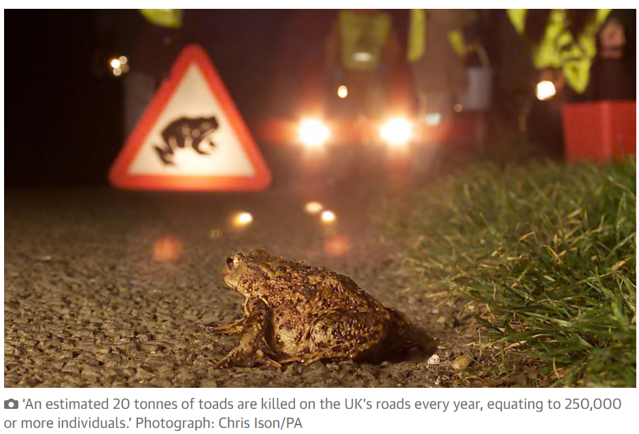
New amphibian fencing to help protect wildlife in Walton on the Hill
November 2026
ACO fencing installation: 6–11 November
A conservation project led by Walton on the Hill Toad Patrol, working in conjunction with Banstead Commons, will help protect migrating amphibians along Mere Road this November.
The ACO amphibian fencing is scheduled for installation between 6 and 11 November. It will extend for approximately 185 metres along Mere Road, helping reduce the risk to common toads, frogs and newts as they move between their surrounding habitats and breeding sites.
Why is the fencing needed?
Each year, as winter gives way to spring, amphibians begin moving towards their breeding ponds. Many common toads return to the same ponds year after year, following familiar routes through the landscape.
For amphibians travelling towards Mere Pond from the surrounding Banstead Heath woodland and local gardens, Mere Road can present a dangerous obstacle. Traffic can cause significant casualties, particularly on mild, wet evenings when large numbers of animals may be moving at once.
Losing adult breeding toads can affect future populations by reducing the number of animals available to reproduce.
How will the ACO fencing work?
The fencing is designed to help prevent amphibians from moving directly onto the carriageway and guide them towards designated collection points, where they can be assisted by the local toad patrol.
The approximately 185-metre installation will run alongside the tree and bush line, avoiding paths. The low-profile fencing will be covered with soil to help it blend into its surroundings and minimise its visual impact.
Its design also takes account of other wildlife: larger mammals should be able to step over it, while the curved profile allows returning animals to climb back over the banking.
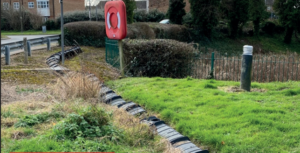 An example of ACO fencing
The fencing will complement the work of Walton on the Hill Toad Patrol, whose trained volunteers monitor amphibian movements and help animals cross roads safely during the spring migration season. Regular checks and maintenance will help ensure the fence remains effective and that amphibians are not trapped or stranded.
How can residents help?
The success of the project depends on the cooperation of the local community. Residents can help by:
- Driving carefully: Take extra care along Mere Road, particularly on mild, wet evenings during the spring migration season.
- Respecting the fencing: Please do not move, damage or interfere with the fence or associated equipment.
- Reporting problems: Let the local toad patrol know about amphibian movements or any damage to the fencing.
- Supporting the patrol: Find out more about volunteering and helping protect local amphibians.
For more information about the patrol, contact Rachel Barnes, Walton on the Hill Toad Patrol manager, at rachelrubicon@gmail.com.
A practical step towards protecting local wildlife
The ACO amphibian fencing is an important opportunity to reduce road casualties and support the conservation of wildlife in Walton on the Hill.
By combining the new fencing with volunteer patrols and public awareness, the project aims to give more amphibians a safe opportunity to reach their breeding ponds and return to their surrounding habitats.
With special thanks to the following individuals and organisations for supporting this project:
- Walton Heath Golf Club
- Rory Deegan for volunteering to dig the trench for the panels
- Chris Campbell of SARG for sourcing the fencing, arranging delivery, and consulting at every stage of the project
- Toad Patrol volunteers
Find out more: