
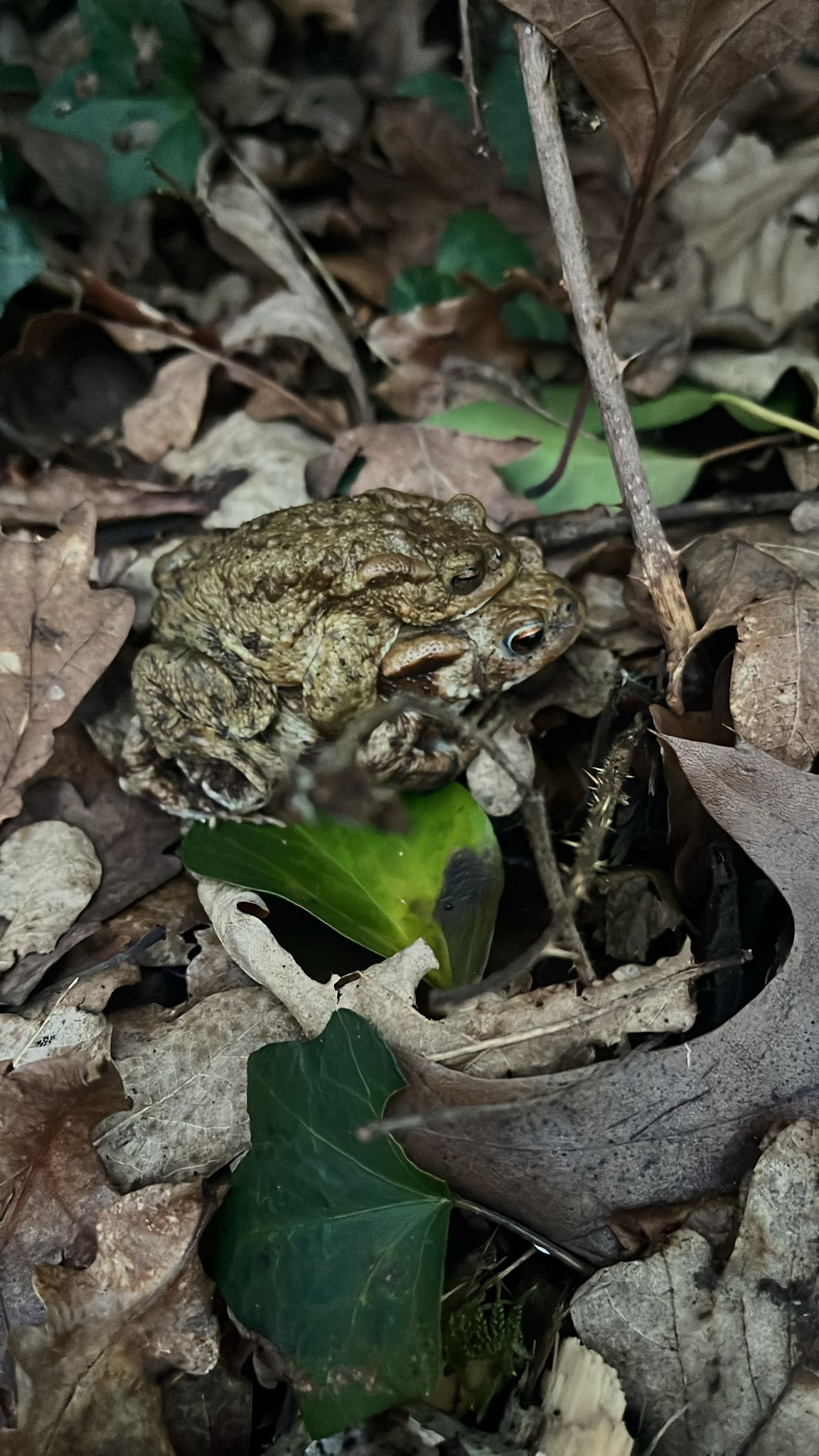
Protecting toads and other amphibians on Banstead Commons
October 2026
Banstead Commons provides valuable habitats for a variety of wildlife, including common toads, frogs and newts. As the seasons change, these often-overlooked amphibians move through woodland, gardens, grassland and other sheltered habitats, sometimes crossing roads as they travel between their feeding, hibernating and breeding sites.
Protecting these journeys is an important part of conserving local wildlife and maintaining the rich biodiversity of our Commons.
Getting to know our local amphibians
Common toads (Bufo bufo) are recognisable by their warty brown skin, golden or copper-coloured eyes and relatively short hind legs. They spend much of the year on land, sheltering in woodland, leaf litter, hedgerows and other damp, sheltered places.
Frogs and newts also depend on suitable habitats across the local landscape. While ponds provide essential breeding grounds, amphibians spend much of their lives away from water, moving between different habitats as they feed, shelter and reproduce.
During late winter and early spring, common toads begin their annual migration towards breeding ponds. Movement often starts in February, sometimes earlier during mild winters, and can continue into March or April depending on the weather. Mild, wet evenings are particularly important, with amphibians often moving after dark.
These journeys can bring them into contact with roads, where passing traffic presents a significant risk. The movement of young amphibians away from breeding ponds later in the year can also expose them to danger.
Why amphibians matter
Toads, frogs and newts play an important role in the local ecosystem. They feed on a variety of invertebrates and form part of the wider food web, supporting the natural balance of the habitats they occupy.
Their presence is also a reminder of the variety of wildlife supported by Banstead Commons and the surrounding village. Protecting amphibians means looking after the wider network of habitats they rely on, from ponds and woodland to hedgerows, gardens and connecting green spaces.
How can residents help?
There are several simple ways to help protect amphibians across Banstead Commons and the surrounding area:
- Drive carefully: Be particularly vigilant on mild, wet evenings during the amphibian migration season, especially on roads close to ponds, woodland and other suitable habitats.
- Look out for wildlife: Remember that amphibians can be found in a variety of locations, not just at Mere Pond.
- Protect their habitats: Where possible, retain suitable damp, sheltered areas and avoid disturbing amphibians or their resting places.
- Report sightings and hazards: Share information about amphibian movements and potential road risks with Walton on the Hill toad patrol volunteers.
- Support local conservation: Find out more about the work of Walton on the Hill Toad Patrol and consider volunteering to help protect migrating amphibians.
Working together for local wildlife
Small actions can make a meaningful difference to the survival of our native amphibians. Through careful driving, habitat protection, volunteer efforts and greater public awareness, our community can help ensure that toads, frogs and newts continue to thrive across Banstead Commons.
Find out more: